Spoiler note: This article discusses the film’s theatrical framing.
In Digger (2026), Tom Cruise’s Digger Rockwell inhabits a mansion that makes wealth and control visible. The film is about power, performance and a world being altered from the ground up. Its architecture is part of the story: rooms, windows, corridors and screens shape what we see, what we believe and how close the characters are to the damage they have caused.

Warner Bros. credits Dennis Gassner and Richard Johnson as production designers, with Emmanuel Lubezki as cinematographer. The film was shot entirely in VistaVision, a large format that gives the image room for detail and scale. But the most revealing design choice is not simply how large the sets are. It is how the film changes the way those spaces are framed.

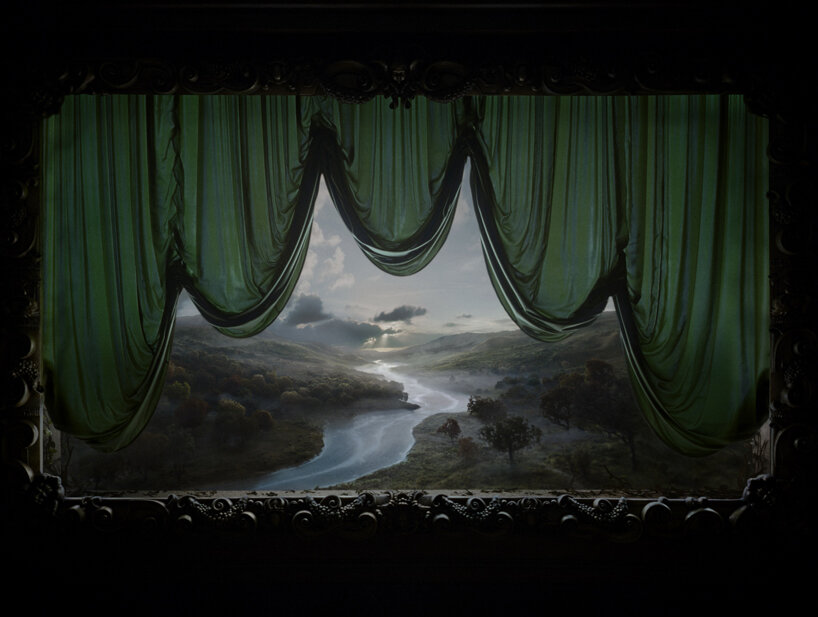
A stage built inside the film
Digger moves between a theatrical performance and the world beyond it. Director Alejandro G. Iñárritu told Business Insider that the stage scenes had to work within the limits of a three wall set. Rather than hide that restriction, the production used it for comic timing and theatrical gestures.
That decision gives the rooms a double life. They need to feel like convincing places within the story, while also reminding us that they are constructed spaces with an audience beyond the frame. A corridor or doorway can appear ordinary at first, then feel slightly wrong once we understand how carefully the stage world has been arranged.

The house: a trophy estate
The house reads as a lavish country estate with a hunting-lodge edge: monumental arches and a formal stair sit alongside dark, richly dressed rooms, oversized windows and animal trophies. It does not belong to one neat historical style. The mix feels deliberately extravagant, as if the owner has assembled a private world around himself. A Designboom feature on the set design notes details such as antler-lined mirrors and taxidermy.
That choice helps make Digger’s worldview visible. The landscape becomes a framed possession; animals become trophies; the scale of the rooms gives him privacy and distance. This is an architectural reading rather than a stated quote from the designers. Iñárritu has said that the sets and window frames were planned carefully to explain the characters’ world and shape what viewers see. In that light, the house works as a portrait of wealth and control, and as a stage on which Digger performs power.

About these house photographs: these are actual film stills of the mansion environment seen on screen. The sources cited here discuss the house sets; this article does not identify a verified real property or residential address for them.
Wide views, close views
Iñárritu described a deliberate change in camera language. For the play scenes, he used wide lenses to keep bodies, hands and feet visible, as they would be on a stage. Away from the stage, the camera moves closer. He also said the palette and sound change with the setting.
That shift makes architecture active rather than decorative. A wide view lets us study the whole room and the way people perform inside it. A tighter view narrows attention to faces and reactions. The building has not changed, but our relationship with it has.
Windows, screens and distance

In the same interview, Iñárritu said he wanted viewers to feel lost among the frames and windows. The repeated borders inside the image can make a character seem watched, boxed in or separated from the world outside. They also suit a story about people who control the view from comfortable interiors while consequences unfold somewhere else.

The film’s disasters were initially imagined through large physical locations and water tanks. Iñárritu said that approach changed: events were instead shown through television screens and tablets. That turns the screen into part of the architecture. The crisis is visible, but it is also mediated, contained and kept at a distance.
For an architect, that is a useful distinction. A window can connect a room to its surroundings, but it can also turn the outside world into a picture. A screen can bring an emergency into a meeting room without making anyone physically experience it. Digger uses those familiar boundaries to ask who gets to observe, who gets to decide and who has to live with the outcome.
What to notice when you watch
- Frames within frames: Notice windows, doorways and screens that divide the image.
- Thresholds: Pay attention to who can enter a room and who is left outside.
- Camera distance: Compare the broad stage views with the closer scenes away from it.
- Control: Ask whether a space gives its occupants a view of the damage, or protection from it.
The architecture of Digger is not a catalogue of buildings. It is a way of staging power. The most important question is not only what has been built, but who controls the frame, the room and the distance between decision and consequence.
Further reading: Visit the official Digger movie site for the synopsis, credits and trailer. Read Iñárritu’s interview with Business Insider for more on the film’s sets and visual approach, and Designboom’s set-design feature for a closer look at the house.


No comments:
Post a Comment
Thanks for taking the time and effort to comment :)