From a cluster of Bel-Air estates to a compact South Texas home, Elon Musk’s changing addresses tell a story about money, image and proximity to work. The most revealing turn was not a move into a more spectacular house. It was the public decision to sell almost everything, followed by a return to property through a different set of homes and companies.

Before the headlines: a South African childhood
Musk was born in Pretoria in 1971 and spent his childhood in South Africa. His family’s homes belong to a very different chapter from the Californian estates that later defined his property portfolio. Reporting on his childhood describes his father’s large house in Waterkloof, an affluent Pretoria suburb. That background is useful context, but it is not a neat architectural origin story: there is no reliable public record of a succession of childhood houses that can be traced as a design timeline.
Read the Guardian’s reporting on Musk’s childhood and Pretoria.
Bel-Air: a portfolio built around one address
By the 2010s, Musk had assembled a substantial collection of homes in Los Angeles, particularly in Bel-Air. Public reporting and sales records described several properties held through entities linked to him, including a large 1990 mansion and neighbouring homes. The scale was conventional celebrity real estate: generous lots, pools, tennis courts, high-security boundaries and expansive entertaining areas.
Architecturally, the portfolio was less a single statement than a collection. Some houses were large contemporary or Mediterranean-influenced estates; others were more modest California homes. The appeal was the setting and privacy as much as the architecture: hillside plots, mature landscaping and proximity to Los Angeles business and social life.


Gene Wilder’s house: the one with a condition
The most distinctive house in the group was a single-storey Bel-Air home once owned by actor Gene Wilder. It had a softer, more personal character than the neighbouring mansions: a ranch-style profile, curved brickwork, broad glazing and a garden that opened towards the golf course. Musk bought it in 2013 and, when he put it up for sale in 2020, said it should not be demolished or stripped of its character.
He sold the house to Wilder’s nephew, Jordan Walker-Pearlman, and his wife, reportedly arranging a loan as part of the sale. The arrangement later unravelled. Musk’s 2024 return to ownership followed a foreclosure process, illustrating that “selling” a home does not always end the story of who controls it.

2020: “Will own no house”
In May 2020, Musk announced that he was selling almost all physical possessions and would “own no house”. The statement was dramatic, but the transactions took time. Several Bel-Air homes were listed and sold; reporting put the eventual proceeds from multiple California properties at roughly US$130 million. In 2021 he also put a large Hillsborough estate on the market, a property he had described as being used for events.
The pledge became a story about stripping away excess. But it was also a useful reminder to separate a public statement from a completed property record. The listings were real, the sales happened over time, and the Gene Wilder house remained an exception before Musk later regained control of it.
Los Angeles Times: Bel-Air sales · Inman: the Hillsborough listing
Boca Chica: small, close to the launch site
In 2021, Musk described his primary home as a roughly US$50,000 house in Boca Chica, Texas, rented from SpaceX. The reported two-bedroom home was a sharp visual counterpoint to the Bel-Air portfolio: compact, plain and close to the Starship development and launch operations. It was not a polished “tiny-house” lifestyle set. Its meaning came from location and use.
Walter Isaacson later shared an interior photograph of the simple room where he met Musk. That image offers a rare, grounded look at the house itself, rather than another speculative exterior shot.


The Boxabl story: a guest house, not the whole story
A second compact-home story became attached to Musk: the Boxabl Casita, a factory-built modular dwelling. Musk said he owned a Boxabl unit and used it as a guest house near his Texas base. It was widely described online as his home, but Musk said he lived in a different small house. The distinction matters. The Casita became a symbol of rapid, low-cost prefabrication, while the Boca Chica house was the one he identified as his residence.
For architecture, the contrast is more interesting than the viral “billionaire lives in a box” headline. A compact factory-made unit suggests a product and a construction system; the small Boca Chica house represents a location-driven choice. Neither is evidence that Musk had abandoned property altogether.
Texas again: a less simple return
Recent reporting describes a more complicated Texas picture. The Wall Street Journal reported in 2026 that companies linked to Musk had acquired at least three large houses in West Lake Hills near Austin, plus smaller farm properties and land around Del Valle and Snailbrook. The houses were reported as traditional, substantial suburban homes, with privacy and proximity to Musk’s companies and family arrangements shaping their appeal.
These are reported links through companies and property records, not a transparent personal portfolio. Texas is a non-disclosure state for sale prices, and the details of ownership and occupancy can be difficult to establish. The account is also very different from the 2020 promise: the spectacle has shifted from owned California mansions to a dispersed, company-connected Texas footprint.
Wall Street Journal: What Musk bought and sold during his quest to “own no house” · KUT: Austin-area property and neighbourhood reporting
Family, partners and the Texas homes
The homes story has become inseparable from Musk’s family life. Public reporting counts at least fourteen children with four women. He married writer Justine Wilson in 2000; their first child, Nevada, died in infancy, and they later had twins and triplets before separating in 2008. Musk and musician Grimes had three children during an on-and-off relationship that began publicly in 2018; their separation was followed by a custody dispute. Neuralink executive Shivon Zilis has four children with Musk, and 2026 reporting described their romantic relationship and a shared Austin household. In 2025, Ashley St. Clair said she had a son with Musk; that claim led to public paternity and custody proceedings.
Those relationships give the recent property picture a different reading. The Wall Street Journal reported that Musk-linked companies acquired several West Lake Hills houses, with a plan described as bringing mothers of his children and the children into nearby homes. The reported cluster is suburban and practical in appearance: separate houses, security and short distances, rather than one showpiece family mansion. Property ownership and family arrangements remain complex, so this is best understood as reported context, not a settled household plan.

The Guardian on Zilis and Musk’s relationship and children · Reuters on the 14th child · The Wall Street Journal on the Austin-area homes
What the houses say
Musk’s house story is often told as a straight line: mansion, sale, tiny home. The record is messier. He accumulated multiple California properties, publicly committed to selling them, moved his stated base close to SpaceX in South Texas, retained and later regained the Gene Wilder house, and became linked to new property holdings around Austin.
The architectural shift is still striking. The Bel-Air houses performed wealth through land, amenities and separation from the city. The Boca Chica home was modest because the work was nearby. The newer Texas holdings appear to put privacy, family logistics and business geography first. His property choices have not settled into one design philosophy; they track changing priorities and public narratives.
Suggested Books
Four books for readers who want more context on Musk, Tesla, SpaceX and the technology culture behind the headlines.
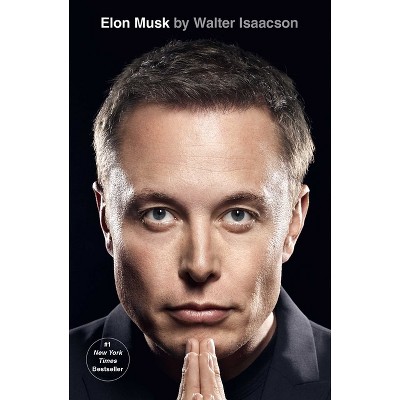 Elon Musk
Walter Isaacson
A recent biography based on extensive access.
 Elon Musk: Tesla, SpaceX, and the Quest for a Fantastic Future
Ashlee Vance
The earlier account of the companies’ formative years.
 Ludicrous: The Unvarnished Story of Tesla Motors
Edward Niedermeyer
A critical history of Tesla’s rise.
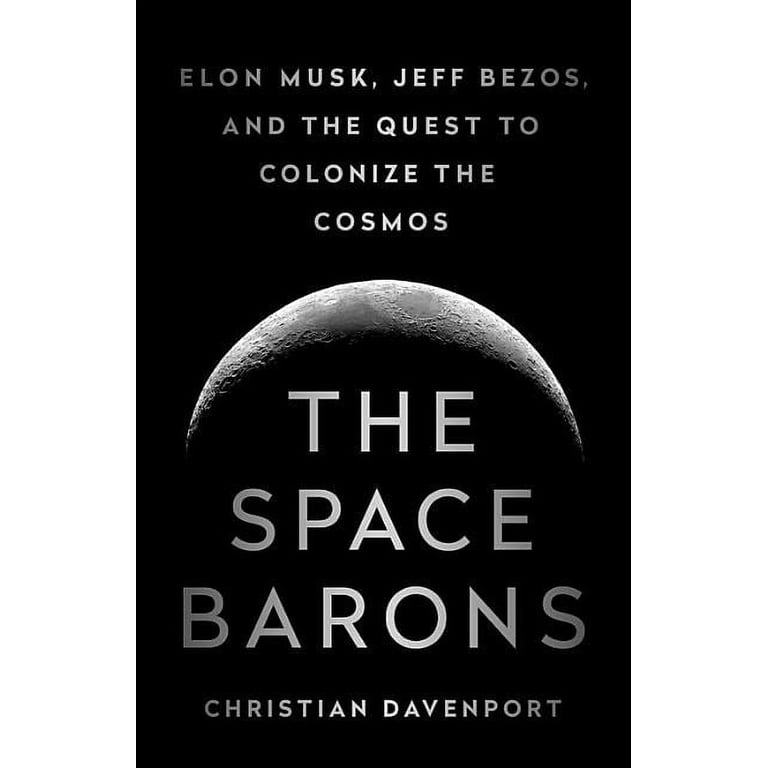 The Space Barons
Christian Davenport
The private space race and the people funding it.
Sources and further reading
- Los Angeles Times: the 2020 listings
- Los Angeles Times: Bel-Air sales
- CBS News: Musk’s South Texas home
- Architectural Digest: property overview
- Wall Street Journal: Texas and California holdings (2026)
Ownership and residence details change over time. This feature distinguishes Musk’s own public statements from properties reported as linked to him or to associated companies.


No comments:
Post a Comment
Thanks for taking the time and effort to comment :)