A roof can be a building’s quietest surface at street level and its boldest elevation from above. Across the world, tiles and shingles turn weather protection into pattern: repeated shapes catch light, mark a place, carry a craft tradition or announce who once held power.
The roof in our opening image belongs to the BME National Technical Information Centre and Library in Budapest. Its orange-and-white geometry is not painted decoration: glazed ceramic tiles make the pattern part of the roof itself. From Hungary and France to Iran, China, Japan, Korea, Thailand, Russia, Norway, Portugal and Puebla in Mexico, patterned roofs show how local materials become architecture’s most expansive canvas.
Budapest: geometry in Zsolnay ceramic
Designed by Samu Pecz, the library moved into its present building in 1909. Its roof is laid in warm orange and pale ceramic pieces, with diamonds and stepped motifs radiating along the ridges and valleys. The pattern is especially legible from the air, where the building’s cross-shaped plan becomes a framework for the tilework. The tiles were made by the Zsolnay factory, whose glazed ceramics became a defining feature of Hungarian architecture around the turn of the twentieth century. Here, ornament is bound to the building’s shape: every ridge, junction and roof plane changes the rhythm.

Beaune: diamonds of glazed Burgundy
The Hôtel-Dieu in Beaune is known for a steep roof patterned in coloured glazed tiles. Green, yellow, red and dark tiles form repeating lozenges and bands across the roof planes. The geometry is easy to recognise, but it is also a practical assembly: small overlapping units shed rain while giving the large roof a finely scaled surface. The Hôtel-Dieu was founded in the fifteenth century; the roof seen today was reconstructed in the early twentieth century, so its famous pattern is a carefully renewed tradition rather than an untouched medieval finish.


Budapest: a church roof that catches the light
At Matthias Church, another Budapest landmark, patterned Zsolnay tiles cover the roof in saturated colour and intricate repeated forms. The design works at two distances: the broad colour fields register across the city, while the smaller motifs reward a closer view. Glazed ceramic changes with the weather, appearing crisp in bright sun and deeper in overcast light. The roof is therefore never quite a flat image; it is a surface that moves between colour, reflection and shadow.


Isfahan: geometry wrapping a dome
At the Sheikh Lotfollah Mosque, a tiled dome rises above Imam Square in Isfahan. Built in the early seventeenth century, the dome’s pale surface is patterned with fine tilework that shifts in colour from cream towards pink as daylight changes. The design wraps a curved form, so the geometry appears to gather and tighten as it climbs towards the crown. From the square, it reads as a single domed silhouette; closer up, the pattern resolves into a dense surface of individual pieces.


Beijing: colour that once marked rank
In Beijing’s Forbidden City, glazed yellow roof tiles sit above richly painted eaves. The roofscape reads as a strong field of gold, while the brackets and soffits beneath it carry smaller bands of blue, green, red and white. The distinction matters: the painted pattern is concentrated under the eaves, while the glazed roof tiles provide the broad colour plane. Yellow was closely associated with imperial authority, and its use across the palace roofscape made rank visible in the city.


Kyoto: the quiet rhythm of kawara
At Tenryū-ji in Kyoto, the roof’s pattern is quieter: rows of dark clay kawara tiles repeat across broad, gently curving planes. Concave and convex pieces overlap to channel water and cover the roof, producing a steady rhythm of arcs and seams. The result depends less on contrasting colours than on repetition, shadow and the curved eaves. It is a reminder that a roof can be patterned without being brightly coloured; the craft and arrangement of the units do the work.


Seoul: the repeating curves of a hanok roof
In Korean traditional houses, roof tiles called giwa form measured, overlapping courses, while curved eaves soften the roof’s silhouette. At the ends of the rows, round tile caps can carry relief patterns. Their close repetition turns a practical edge detail into a graphic border, while the broad, gently lifted roofline remains unmistakable across a hanok neighbourhood.


Thailand: layered temple roofs and vivid gables
Thai temple roofs are composed as overlapping tiers, with sharply lifted edges and richly ornamented gable ends. At Wat Phra That Doi Suthep, the close view reveals how the tiled roof surface and sculptural edge work together; at Wat Pho, coloured ornament gathers around the gable and eaves. The visual pattern comes from the whole roof assembly, not from tile colour alone.


Puebla, Mexico: Talavera on the dome
In Puebla, a regional tradition of Talavera poblana—glazed, hand-painted ceramic—has also been used on church domes. The vivid tiles turn a curved roof into a landmark that can be read from the street and across the surrounding town. This is a regional expression of Mexican ceramic craft, rather than a style shared by every part of the country.

Russia: painted domes and wooden shingles
Russia offers more than one roof tradition. In Moscow, Saint Basil’s Cathedral gathers a cluster of vivid domes above Red Square. Their striped, spiralling and chequered surfaces turn each crown into a distinct object, while the group reads as one lively skyline. A closer view shows how the painted and tiled pattern follows the domes’ curved, ribbed forms.


Far to the north on Lake Onega, the wooden churches of Kizhi show another expression of Russian roof craft. Their layered roof frames and cupolas are built in timber, with small wooden elements repeated across curved forms. Instead of colour contrast, the pattern comes from carpentry, silhouette and the rhythm of the coverings.

Norway: roofs dressed in wooden scales
At Borgund Stave Church in western Norway, wooden shingles cover both roof and walls. Their overlapping edges create a scale-like texture, while the church’s rising tiers and ridge details give the silhouette its layered rhythm. The pattern is made by repeated pieces of timber, weathering into a deep, almost black surface.

Portugal: the rhythm of curved clay tiles
In Portugal, patterned roofs often rely on the repeated profile of terracotta tiles rather than contrasting colour. The pen-tile roof at the University of Coimbra shows how simple curved units make parallel lines, ridges and shadows across a broad plane. A closer roof detail from Marvão Castle makes the overlapping assembly legible: each tile protects the one below, and the sequence gives the roof its texture.


A pattern built for the weather
These roofs are not variations on one global style. Their patterns grow from different materials and building traditions: glazed ceramic in Hungary and Burgundy, tilework on Iranian domes, imperial colour in Beijing, the measured overlap of Japanese clay tiles, sculpted roof-end tiles in Korea, layered Thai temple roofs, Russian painted domes and wooden shingles, Norwegian timber scales, Portuguese clay tiles and Talavera-clad domes in Puebla. Each begins with a roof that must cover a building and manage water. Pattern gives that necessary surface another life—as a view across a city, a record of skilled making and a visual expression of place.
Four books to read next

The Tile Book: History, Pattern, Design
A visual survey of tile traditions and patterns from around the world.
View on Amazon AU ↗ paid linkISBN 9780500480250 · Check for sample pages ↗

Architectural Ceramics
A concise illustrated history of decorative ceramics used on roofs and façades.
View on Amazon AU ↗ paid linkISBN 9780747805175 · Check for sample pages ↗
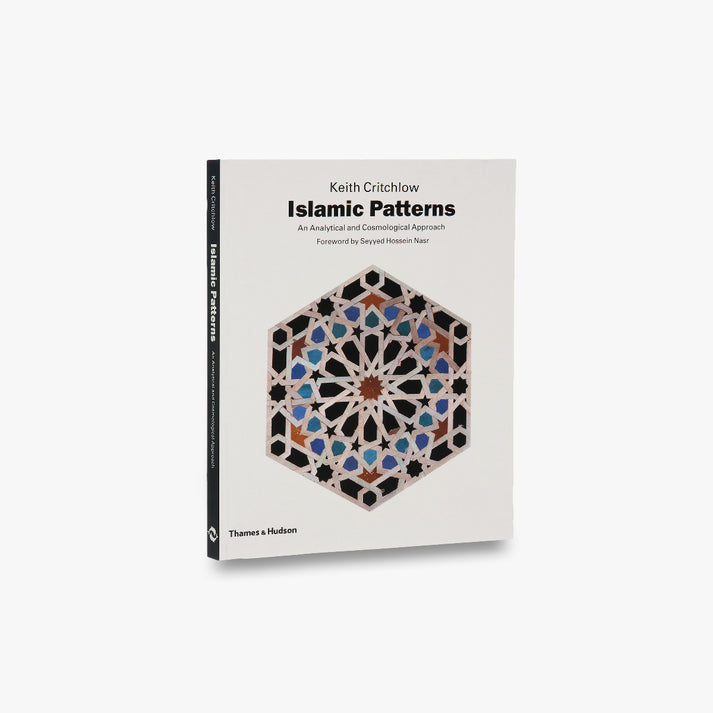
Islamic Patterns: An Analytical and Cosmological Approach
An illustrated study of the geometry behind Islamic decorative traditions.
View on Amazon AU ↗ paid linkISBN 9780500270714 · Check for sample pages ↗

Japanese Architecture: Traditional Skills and Natural Materials
An illustrated introduction to traditional materials and specialist craft behind Japanese buildings.
View on Amazon AU ↗ paid linkISBN 9784861528217 · Check for sample pages ↗
Sources and further reading
- BME: history of the Central Library
- Budapest100: Central Library of BME
- Hospices de Beaune: history
- UNESCO: Masjed-e Jāmé of Isfahan
- China State Council: the Forbidden City’s colour and roof tiles
- Kizhi Museum: UNESCO World Heritage description
- Society for the Preservation of Ancient Norwegian Monuments: Borgund Stave Church
- Wikimedia Commons: tiled roofs in Portugal


No comments:
Post a Comment
Thanks for taking the time and effort to comment :)